- Somebody is bullying somebody else.
- One of the victims goes looking for the A-Team to help them out and ends up getting contacted by Hannibal in disguise.
- Hannibal (in disguise) goes to whoever is doing the bullying and asks them to stop; they refuse, he takes off the disguise, and tells them that now they're going to face the wrath of The A-Team.
- The team builds something in preparation for the big confrontation, but we don't see exactly what they're building, just a series of closeup shots of welding and connecting things.
- Murdock does something crazy (often annoying B.A. in the process).
- B.A. does something awesome.
- One of the group being victimized is an attractive woman that Face hooks up with.
- There's a climactic battle in which whatever the A-Team built is revealed, and which often has lots of guns being fired but nobody actually getting killed or even hit.
- The villain surrenders.
- Conclusion.
Monday, October 28, 2019
The A-Team Episode Plot Outline (or, how being a writer for The A-Team must have been one of the easiest jobs ever)
At lunch last week I got into a discussion about classic TV shows, and one show that ended up getting mentioned was that 80s guilty pleasure show The A-Team. While talking about the show, I realized that at least half the episodes consisted of the following plot:

Sunday, May 5, 2019
What makes A New Hope's two signature scenes so iconic?
When talking to someone about Star Wars (either the series in general or specifically A New Hope), two scenes from A New Hope almost invariably get mentioned: the opening scene with the two spaceships, and the cantina/bar scene. The other day, a thought occurred to me: just what is it about these scenes that makes them stand out in the viewer's mind? With that question in mind, I rewatched those two scenes and made the following observations:
The Opening Chase:


The Bar Scene:


The Opening Chase:


- It makes for a memorable opening
- There is the opening crawl, then we see a spaceship flying past the screen, with lasers firing back and forth, all of which has been seen before. Then, however, we are shown who is pursuing that spaceship, by having the underside of the pursuing Star Destroyer slowly fill the screen until we think it just can't get any bigger. Even when viewed on TV or a computer screen this shot is still quite impressive, but when seen on a big screen it is truly spectacular (especially if it is the first time an audience has seen something like this).
- It drives home the David and Goliath aspect of the rebels vs. the empire
- Just looking at the relative size of the two ships drives home the odds the rebels have to overcome and how powerful the Empire is.

- It started a trend for the opening scenes of the other films in the trilogy, and other works
- The Empire Strikes Back and Return of the Jedi both used a shot of a Star Destroyer for their opening scenes; similarly, Timothy Zahn's Thrawn Trilogy had each book open with a scene taking place on the bridge of a Star Destroyer.


The Empire Strikes Back 

Return Of The Jedi


- It draws the audience in
- Having an action-filled introduction, with both ship-to-ship combat and an infantry-based firefight, makes for a compelling opening sequence, and keeps the audience interested in the rest of the film, even during the more slow-paced sequences that follow on the surface of Tatooine.
The Bar Scene:


- It's thematically important
- Star Wars: The Legacy Revealed describes the scene as the "Crossing the Threshold" part of the hero's journey. The door to Luke's past way of life has been shut; when he enters the Cantina, it's his first step into the wider universe. In addition, the bar scene introduces the characters Han and Chewbacca (RIP Peter Mayhew), and also shows the lightsaber in action for the first time.
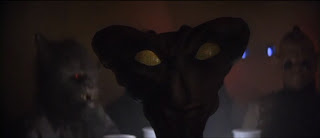
- It's a classic example of a "big reveal"
- Up until now, all lifeforms seen in the film have been either humans, animals, or aliens who were always seen wrapped in robes. Now, however, we not only see alien lifeforms, but we see such a sheer variety of vastly different species that it's almost overwhelming. In addition, the alien lifeforms look truly "alien", rather than just humans with pieces of rubber glued to their ears or foreheads.


- It's both utterly alien and highly familiar at the same time
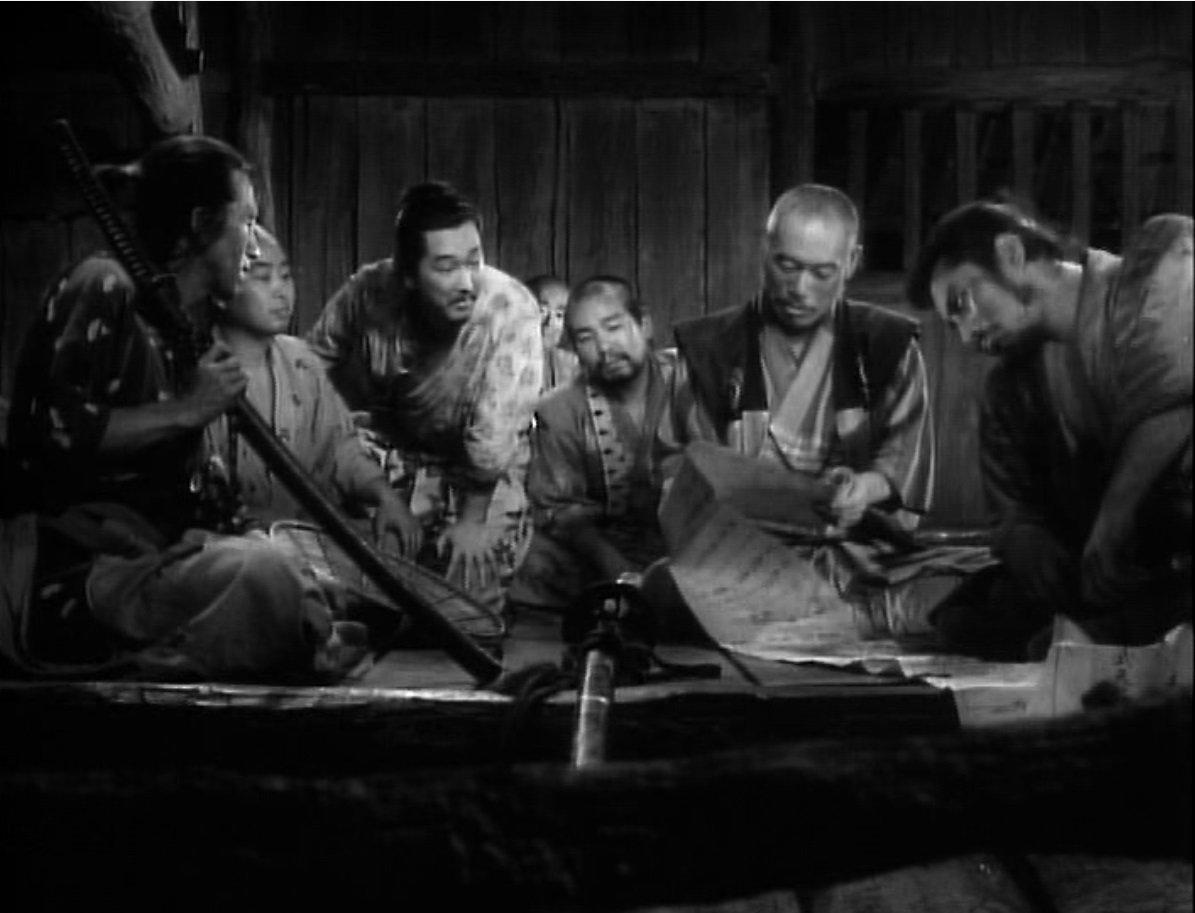
- For all the ways that the bar is alien, there is still something oddly familiar about it; the bar is highly reminiscent of anything from an old west saloon to a pirate's tavern to a Prohibition-era speakeasy to the inn that the farmers in The Seven Samurai stay in when they try to hire samurai.


Back To The Future Part III 
The Seven Samurai 

The Magnificent Seven 

High And Low - It creates the feeling for the audience that there's a larger universe out there, beyond just the protagonists of the film
- Looking at the other people and aliens in the bar, I often got the feeling that if the film had followed them around instead of Luke, Obi-Wan, Han, and Chewie, it would make for a film just as interesting (well, OK, almost as interesting).




Tuesday, April 16, 2019
The death of classic Mr. Burns
One sign of the deterioration in quality of The Simpsons has been the changes (for the worse) that its characters have undergone: Homer goes from being a lazy but generally good-natured dolt to a bombastic loudmouth, Lisa goes from being a bright and creative but still flawed and vulnerable young girl to a shrill liberal mouthpiece for the writers, Ralph Wiggum becomes a walking non-sequitur dispenser, Flanders goes from a sincere Christian and all-around good person to a religious nutcase, and so on. In most characters, this is a gradually-occurring process, but with Mr. Burns this can be traced to a single moment: Mr Burns' appearance on the radio in Monty Can't Buy Me Love.
To begin with, it's worth taking the time to remember just who classic Mr. Burns was as a character: he was utterly evil, immoral (or at least amoral), ruthless, vicious, and tended to hold everyone and everything other than himself in utter contempt. Furthermore, due to his extreme wealth and influence, he had all kinds of underlings on hand (human and animal) to carry out his bidding.


Offsetting this malevolence was his extreme physical frailty, which was often a source of humor on the show: for example, when he thought he was reenacting a notorious scene from The Untouchables, he's in reality only lightly tapping someone with a baseball bat. At times, this aspect gives Mr. Burns a sympathetic side, such as when he asks Marge "Can you make me beautiful?" in Brush With Greatness, or when confronted with his own imminent mortality in Burns' Heir. More often, however, it was used for comedic effect, such as when he thinks he's giving Smithers "the thrashing of a lifetime", or trying to bowl.


To begin with, it's worth taking the time to remember just who classic Mr. Burns was as a character: he was utterly evil, immoral (or at least amoral), ruthless, vicious, and tended to hold everyone and everything other than himself in utter contempt. Furthermore, due to his extreme wealth and influence, he had all kinds of underlings on hand (human and animal) to carry out his bidding.


Offsetting this malevolence was his extreme physical frailty, which was often a source of humor on the show: for example, when he thought he was reenacting a notorious scene from The Untouchables, he's in reality only lightly tapping someone with a baseball bat. At times, this aspect gives Mr. Burns a sympathetic side, such as when he asks Marge "Can you make me beautiful?" in Brush With Greatness, or when confronted with his own imminent mortality in Burns' Heir. More often, however, it was used for comedic effect, such as when he thinks he's giving Smithers "the thrashing of a lifetime", or trying to bowl.


Anyway, onto the episode itself. When Mr. Burns is upstaged at a megastore opening by Richard Branson-esque fun-loving billionaire Arthur Fortune, Mr. Burns is taken aback by the latter's mannerisms and becomes jealous of the public's adoration of Fortune, especially after watching a news segment that evening. This seems out-of-character for Mr. Burns, given the massive amount of contempt that he holds everyone else in; a big part of what made Two Cars In Every Garage And Three Eyes On Every Fish such a good episode was Burns' need to curry favor with the same public that he despises. Perhaps the writers could have thrown in an aspect that would make Mr. Burns actually care about this, such as mentioning that Mr. Burns is losing revenue to Arthur Fortune's company, or something similar.
In any case, Mr. Burns tries to get the public to love him through various means (in a sequence that's mostly dead air) and then tries to make himself more popular by going on the radio, where Bart tricks him into going on-air with local shock jock Jerry Rude*. When Rude begins asking Mr. Burns some rather ...personal questions, Mr. Burns simply reacts with shock, and when Jerry makes a bunch of farting sound effects, Mr. Burns collapses. Classic Mr. Burns would have immediately threatened Jerry and/or ordered somebody to kill him, and in a classic-era episode there might have even been a sign that Mr. Burns had made good on his threat (perhaps as a freeze-frame bonus in a newspaper headline later in the episode, such as: Main Headline: Burns To Search For Loch Ness Monster/Secondary Headline: Jerry Rude's body found in Springfield Harbor). It was at this point I knew I was no longer seeing the classic Mr. Burns on screen...
*Played by Michael McKean, Jerry Rude is basically "Howard Stern as his critics see him". Apparently, Howard Stern was originally asked to appear on the show, but declined; it's interesting to think what the scene and episode might have been like had he agreed to appear.
Screencaps and animated Gifs are from the excellent (and highly addictive) Frinkiac.com
Thursday, January 24, 2019
Ramen Review Part 3: Back to Basics With Maruchan (Part 1)


Like I mentioned in my first Ramen Review, Maruchan was the brand I tended to have the most often while growing up. Since Maruchan makes so many different flavors of instant Ramen, I divided this review into 2 parts. The first part will be for Maruchan flavors that have a Nissin counterpart, while part 2 will be for flavors that are unique to Maruchan.
Beef:

Compared to the Nissin beef ramen, the Maruchan version has a thicker, almost creamy taste and feel to it; I like it much better than the Nissin Beef Ramen.
Chicken:

Compared to the Nissin chicken ramen, the Maruchan chicken's broth is thinner and more watery; like the Nissin version, it leaves behind a yellow rim in the bowl after eating, but this rim is broken rather than the continuous circle like that left behind by the Nissin chicken ramen. The flavor is somewhat similar, but tastes watered-down compared to Nissin's chicken ramen.
Chili:
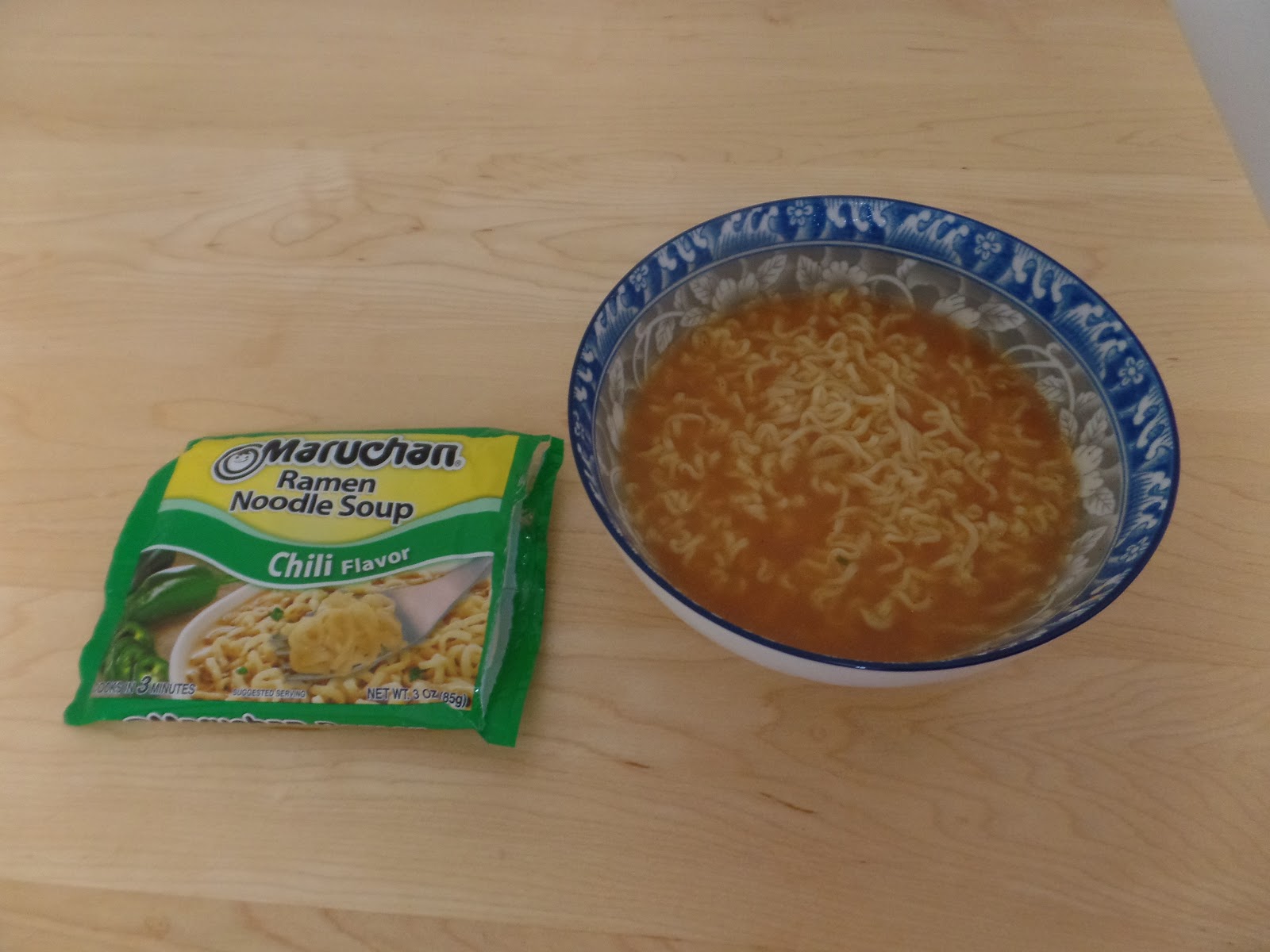
Unlike the delayed reaction of the spiciness in Nissin's chili ramen, the spiciness in Maruchan's chili is more immediately felt. The flavoring in Maruchan's chili has a more artificial-feeling taste and scent, and reminds me strongly of various snack foods, like the spicy version of Doritos.
Oriental:

Unlike Nissin, which renamed their Oriental flavor "soy sauce", Maruchan has kept the "Oriental" name in its ramen. Compared to Nissin, the broth seems a bit darker, and it doesn't seem to have as many of the green flecks as the Nissin version. The flavor is a bit stronger, and also is very salty compared to Nissin's version; I had to have a drink after I finished my bowl, which I did not have to do when I tried the Nissin version. Saltiness aside, this was much more flavorful than Nissin's version.
Picante Beef:

Unlike Maruchan's chili ramen, Picante Beef has a more natural-feeling flavor and scent. It's not as spicy as Maruchan's chili, either. Compared to Nissin spicy beef, it has more of an immediate spiciness, but still has more of a delayed reaction than Maruchan chili. The broth has some solid flecks in it, but not as many as Nissin's spicy beef had.
Shrimp:

The shrimp tastes about the same as Nissin's shrimp, but the Maruchan broth is slightly less watery.
Overall, I'd say that compared to Nissin, I prefer Nissin broth but Maruchan noodles. Maruchan noodles tended to be softer and less firm, and also seem to be slightly thicker than the Nissin noodles. They also have less of a tendency to clump, and have less of the waxy feel they sometimes had when I was trying Nissin ramen.
The flavors I thought each brand did better were:
Maruchan: beef, oriental (with a caveat about its saltiness level)
Nissin: chicken, chili, spicy beef
Too close to call: shrimp
Wednesday, October 24, 2018
Ramen Review Addendum 2: Raoh with added ingredients
In my earlier review, I predicted that the Raoh brand ramen would make a good base for adding other ingredients to, in order to turn it into a full meal which is competitive with restaurant ramen (after all, it's even suggested on the packaging that you do so). I recently experimented with this, and for the most part, those predictions were correct! During my experimentation, I used different ingredients on different soup mixes, with the following results:
Shoyu Ramen with bok choi and roast duck meat:
 I got these ingredients from a nearby Asian grocery store*, and I must say I was quite pleased with the results when I added them to the Shoyu ramen. They nicely complemented the flavor of the Shoyu ramen, turning a somewhat bare-bones product into a full meal.
Tonkotsu Ramen with roast duck meat and sweet corn:
 I must admit, this was not the best combination I came up with. The Raoh Tonkotsu was already rich and filling, so adding a large amount of corn and several pieces of roast duck meat resulted in me having an overstuffed feeling when I finished this bowl. In the future, I will probably add fewer ingredients, or just have the soup itself without anything added.
Adding ingredients really does make a difference with this line of instant ramen, most dramatically with the shoyu ramen; what made it my least favorite variant as a standalone product now makes it my favorite when combined with other ingredients.
*Son Atlantic Market, in Danbury, CT
Shoyu Ramen with bok choi and roast duck meat:

Tonkotsu Ramen with roast duck meat and sweet corn:

Adding ingredients really does make a difference with this line of instant ramen, most dramatically with the shoyu ramen; what made it my least favorite variant as a standalone product now makes it my favorite when combined with other ingredients.
*Son Atlantic Market, in Danbury, CT
Sunday, October 21, 2018
Ramen Review Addendum 1: Non-Ramen Review 1: Vifon Beef-Flavor Vietnamese-Style Instant Rice Noodles
Recently, Mike Kaltschnee of the Danbury Hackerspace has been an enthusiastic reader of my Ramen Reviews, and due to both his enthusiasm for these reviews and his having recently started a low-carb diet, very kindly donated one of his favorite varieties of instant noodles for me to review.
Like the Raoh Tonkotsu Ramen, the contents of this bag consist of the noodles themselves, a soup base packet, and an oil packet.
 Unlike the other noodles that I have reviewed so far, these noodles are prepared by emptying all of the contents of the bag into a bowl, pouring boiled water into said bowl, and then covering it for 3 minutes (all of my previous reviews were prepared by boiling or simmering the noodles in water, then pouring either the noodles and water [as was done with Top Ramen] or just the water [as was done with Raoh] into a bowl with the flavoring pouch's contents).
 When finished, the soup manages to capture much of the smell and flavor of restaurant pho quite effectively. The broth is very flavorful, and the noodles taste a lot like their restaurant counterparts (although the noodles' texture seems a bit "off"; perhaps I've just been spoiled by Raoh noodles...).
All in all, this was quite an enjoyable soup, and I would once again like to thank Mike Kaltschnee for his donation!
Like the Raoh Tonkotsu Ramen, the contents of this bag consist of the noodles themselves, a soup base packet, and an oil packet.


All in all, this was quite an enjoyable soup, and I would once again like to thank Mike Kaltschnee for his donation!
Wednesday, October 17, 2018
Ramen Review Part 2: Nissin Raoh Premium Ramen
While my first ramen review was for Nissin's cheap and basic "Top Ramen" instant ramen, this review is for their premium-brand "RAOH" (meaning "ramen king") brand ramen. The difference between these 2 product lines is apparent in the price; while Top Ramen averages less than a dollar per packet (and in some places can be bought at 20 cents per packet if you buy in bulk), these were 3 dollars each in the sampler set I bought (which admittedly wasn't the best possible deal). Even when bought in combinations that were a better individual price, they still ended up costing about $1.20 each. It's worth noting, however, that this ramen isn't competing so much with the less than 1 dollar each ramen packets as it's competing with restaurant-made ramen in the 8-to-15 dollar price range (although, admittedly, that ramen would also come with things like meat, vegetables, and boiled eggs in addition to the noodles and broth). Unlike their Top Ramen, Raoh Ramen comes in only 3 flavors: Tonkotsu, Shoyu, and Miso.

Although the Raoh packaging suggests adding ingredients like meat, vegetables, and boiled eggs to their ramen, in my review I am only going to review the ramen itself without anything added to it.
Tonkotsu Ramen:

Not to be confused with tonkatsu, tonkotsu ramen uses pork bones to make a thick, cloudy sauce. It is originally from Fukuoka on the island of Kyushu. Right off the bat you can tell Raoh ramen is different because instead of the usual brick of noodles with a powder packet, Raoh noodles come in a round form with 2 packets, 1 of flavoring and 1 of soup base. Because they're not flash-fried the way regular instant ramen is, the noodles are prepared by simmering rather than boiling.

The flavor of the broth is excellent, if not quite as rich or creamy as tonkotsu broth usually is (when I've had tonkotsu ramen at restaurants, the broth had a level of thickness somewhere between gravy and crab or lobster bisque, but I guess you can only go so far with powder mixtures). The noodles have a very different texture/consistency to them compared to the instant variety; if I didn't know otherwise, I could have sworn that these were new handmade noodles! All in all, a delicious start to this review!
Shoyu Ramen:

A fairly basic recipe consisting of a light brown soy-based broth, this is the oldest and most common flavor for ramen. Unlike the Tonkotsu ramen, the flavoring for this came in a single packet.

Miso Ramen:


All in all, I'd say Raoh ramen is an excellent product line; as it is it gives restaurant ramen a run for its money, and when ingredients are added chances are it will be even better! I'll probably do a supplement to this review with various ingredients added, but for this review I wanted to just review the soups themselves.
Of the 3 flavors, I'd say tonkotsu was my favorite, followed by miso, followed by shoyu.
Subscribe to:
Posts (Atom)